Showing posts with label Automotive Engineering. Show all posts

12.28.2015

The Horse & The Scorpion

Benveunti amici!

Things are beginning to take a new-albeit-familiar shape in the world of Italian runabouts. Since the 2007/2011 reintroduction, FIAT S.p.A. a/k/a FIAT USA a/k/a FIAT Chrysler Automobiles (FCA) has added to their product lineup; the 500 in four trim levels, the 500C in two trim levels, the 500/500C ABARTH in manual/automatic options, the 500L in four trim levels and the 500X in five trim levels is the latest to arrive in FIAT studios. Recently, FCA announced the long-awaited return of the 124 Spider (formerly 124 Sport Spider). Already rumors circulate about the possibility of ABARTH versions of the X-over and the Spider are appearing online. 

FIAT Centro Stile Director, Roberto Giolito, promises the next generation of ABARTHs will differ more from the FIATs that they are based upon. Now seems like the most opportune time to wax nostalgic about the styling of the 2008-Present FIAT 500 ABARTH or ABARTH 500 (A500). To find where FIAT's ABARTH division drew inspiration we need only to take a glance in the general direction of the Ferrari F430.

Disclaimer: Entry is based upon fan observations

The ABARTH & Co. division did something special with the [past & present] A500. The runabout performance group always aimed to bridge the gap between the two otherwise unrelated FIAT & Ferrari schools of engineering philosophies. Carlo Karl Abarth even lent his talents to Ferrari. But that is perhaps a story for another time. Recognizing the intent of the FIAT tuning group, I've chosen the 2010 ABARTH 695 Tributo Ferrari and the 2007 Ferrari F430 Scuderia to better hone in on the inspiration for the modern A500. I trust you will see this brief pictorial exercise as the edutainment it is meant to be.

While they are both fine Italian companies there is no real design connection between what Ferrari and FIAT respectively do best. One design focus is meant to tease "C'mon, keep up!" in an exclusive way while the other is meant to invite "Okay, let's go!" in an inclusive way. That stated, there is a clear engineering connection between the marques. ABARTH benefits from its inclusion in the FIAT S.p.A. sports car group (that includes Alfa Romeo and Maserati). At the Maserati level, the group formerly worked in tandem with Ferrari developing. Alfa Romeos are built in Maserati Modena facilities. ABARTH utilizes size-appropriate versions Alfa Romeo technology and FIAT, of course, likewise benefits from what is passed down to ABARTH.


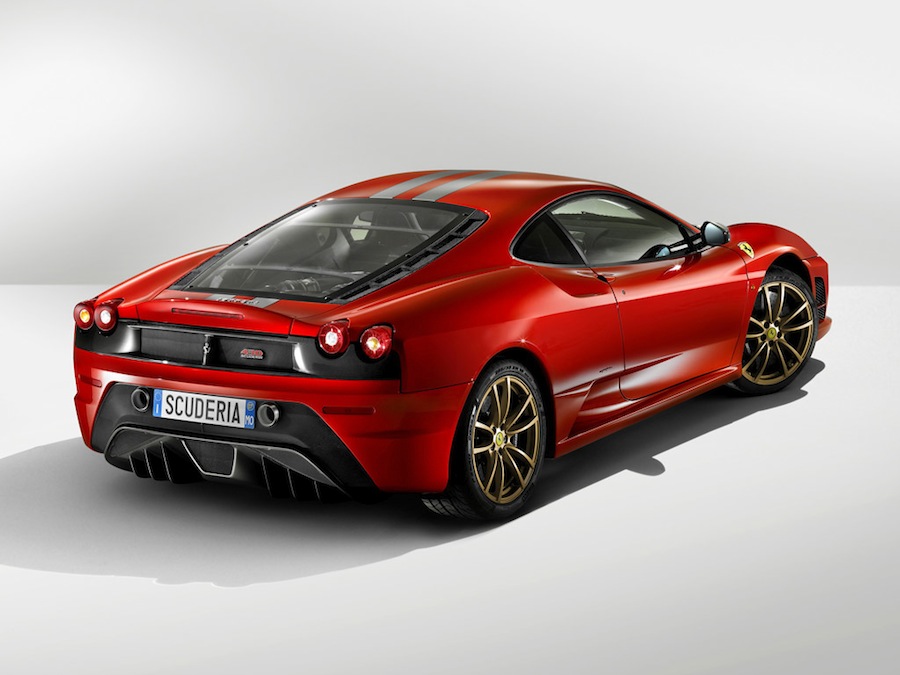

It is absolute lunacy to compare any significant numbers between them. It is certifiable insanity to believe running about in a FIAT-ABARTH feels anything close to racing all-out in a Ferrari. But the shared passion for driving, burning on either end of the Italian automotive spectrum, sets them apart from everything else on wheels and simultaneously binds the FIAT-ABARTH and Ferrari life experiences. It seems strange to write a retrospective about a seven years young smile inducer. But the next generation of naturally aspirated 500s is already on the road. So… ahem...

The cult awaits… Bring on the next generation of scorpions!


Vivere.Amare.Guidare.
(Dedicated to the FIATTechers for the inspiration.)

Ciao!

@

11.17.2015

X Marks the Spot

Benvenuti amici!

I always felt the desire to write about the most important Italian runabouts, but I fully admit to having limited knowledge on so many of them. This may have something to do with my obsession with the various iterations of the 500. To be certain, I could probably spend years focusing solely on the 'cento. But doing so would exclude way too many historical FIAT benchmarks.

The poor man's Ferrari. The first true working man's sports car. One of the top 10 styled cars for the '80s. The X1/9 has been dubbed many things since its 1972 debut and they all fit the special model. But how did the city car queen come into existence? Well, the short answer is "probably not how you imagine". This blog entry is the slightly longer answer.

As is the case with the majority of great FIAT runabouts, the successful introduction of the first true People's Car, the 500, owns the space that is the genesis of what would become the X1/9. While a quick glance at the original Cinquecento may not clearly illustrate this fact, a little bit of digging through the annals of Italian Motorsport history will. The Cisitalia D45 and the corso version of the the 'Topolino' exhibit don Dante Giacosa's desire to make small things go fast while appeasing his employer's desire to make cars of any speed affordable to the broadest demographic.

FIAT 500 'Topolino'

Unfortunately, or fortunately -- depending on one's perspective, most of il Maestro's creative hours would continue to be monopolized with the mandate to bring to market a car every Italian could afford. Sr. Giacosa did just that in 1955, with the FIAT 600. While it is true its predecessor, the Little Mouse, became more affordable with every generation/update, the Seicento hit the market at a lira-saving price.

In addition, the model has the distinction of being the first rear-engined FIAT. In fact, the 'Fitito' a/k/a 'Fičko' was packed with many innovations and distinguishing features when it forever changed the course of engineering/designing small automobiles. Perhaps the greatest of these notables is the fact it is the clear design inspiration of the 1957 Nuova 500. But spending too much time on that model would mean taking an early exit from the road trip to the X1/9. So, let's keep cruising.

FIAT 600

The direct successor to the mega popular 600 would need to build upon its technical advancements. Knowing this all too well, don Dante continued the internal technical name of the Seicento, 100 A-F, with the 850 (internal name of 100 G). The 850 proved so popular it was available in several versions/trims; a sedan, a sport coupè, a van and… most important to the telling of the story at hand… a sport spider. 

The 850 Sport Spider, among the other models hanging from the X1/9 family tree, bears some resemblance to the subject of this entry. The primary reason for the shared styling is the House of Bertone.

There is a long held tradition, at FIAT, of handing off their most successful offerings to "amici di famiglia" for a good shot of fresh ideas. Bertone, among others, played a key role in providing don Giacosa with the fuel he needed to push his engineering (and the future of Italian motoring) further. Perhaps there is an unspoken knowledge of this fact, among FIATisti, and that helps explains why we hold Gruppo Bertone is such high regard.

A little more on that later.

FIAT 850 Sport (Spider)

The next two turns on the road from 500 to X may not look and/or feel logical to most, but they are crucial steps in arriving at our destination. Although not apparent with a first or second or third glance, the FIAT 128 holds a very special place in the evolution of Italian automotive engineering. Much in the same way the 600 had done, 14 years earlier, the 1969 128 marked a break from Turinese mechanical thinking of the time. As the first front-engined and front wheel drive FIAT, one could comfortably crown it as the first modern FIAT model. Major improvements to/advancements on the power layout introduced by Sir Alec Issigonis were tested & proven with don Dante's 1964 Autobianchi Primula and continued with the 1969 Bertone-designed Autobianchi A112.

FIAT 128

The A112 is, perhaps, the most popular Autobianchi among fans of spirited driving. The love child of two FIATs, the 850 Sport Spider and the 2-dr/3-dr hatch version of the 128, the A112 stands on the shoulders of automotive giants.

Although he admired the space saving layout Sir Issigonis introduced, Mister Giacosa did not care for the engine and transmission utilizing the same lubrication source… and space. He felt it cumbersome and this is evidenced by necessary engine removal, in some generations, to replace the clutch with Sir Issigonis' design. Likewise, don Dante had trouble accepting the lack of fresh airflow inherent in the original engineering of Sir Alec. A problem solver, in the truest sense of the word, the father of the city car put his mind and hands to work at FIAT-held Autobianchi.

The automotive world (and market) was changing and automakers either ushered said change or followed in the footsteps of those that did. If you frequent this page, you know the oldest mass producer of 4-wheeled goodness most often fills the role of usher. Autobianchi, for nearly 40 years, is where the Italian powerhouse tested many of it's most ambitious ideas. As successor to breakthroughs like the Primula and A111, the Autobianchi A112 enjoyed a full five years of tweaks and improvements to the ideas introduced in its predecessors. With the 128, the Primula and A112, FIAT and Bertone would discover just how adaptable the new Giacosa ideas could be and herald the next generation of Italian runabouts.

Oh, look, it's a segue!

Autobianchi A112

We finally arrive at a more obvious predecessor to the X1/9. The 1969 Autobianchi Runabout concept, like the A112 and Primula, utilized the engine of  the FIAT 128. Although, due in large part to the Autobianchi-Lancia merge, it never made it beyond the conceptual phase, the Runabout would see the light of day again… as a FIAT. One doesn't need to look too hard to recognize the production model it would become. And one doesn't need to think too hard to understand why don Dante Giacosa (FIAT) & don Marcello Gandini (Bertone) made sure this design dream rolled onto showroom floors. 

Autobianchi Runabout

The numerous race track & sport coupè variations of especially popular FIATs prove Sr. Dante Giacosa was always keen to engineer/design an economical, standalone production sports car. In many ways, the X1/9 (the destination of this blog entry trip) is arguably the first purpose-built FIAT track car since the 1902 24hp Corsa. Unfortunately, with his stepping down from full-time employment in 1970, he was no longer the head of FIAT's engineering division at the arrival of the 1972 X1/9. Fortunately, he continued to serve as a consulting engineer and the concept-become-reality utilized the power unit developed in his Primula, A111, A112, 128 and 127. The FIAT X1/9, itself, began life as ideas for a FIAT 128 sport coupè and/or spider.

FIAT life

The X1/9, like no other model before it, exhibited the "adapt and overcome" nature of Giacosa's transversely-mounted engine side-by-side the transmission & suspension when FIAT-Bertone chose a mid-mounted, rear-wheel drive setup for the mini sports car. This choice further led to the decision to move the spare tire and fuel tank ahead of the engine… maximizing the already great weight distribution and handling of the X1/9. Perhaps all these characteristics, coupled with the aerodynamic and singular (among FIAT runabouts) design and nomenclature, secured the legendary status of the model… and explain why it was not released as the sportiest member of the 128 famiglia.

The X1/9 enjoyed strong enough US sales to warrant three generations outside of Europe. In fact, the sales led to Bertone taking over production and sales after FIAT left the North American market in 1982. Sales fueled the Bertone production years until 1987, in the US, and 1989, in the homeland. The radical nature of the engineering/design that birthed the economical sport-about most easily answers the "why" regarding its popularity among FIATisti, ABARTHisti and non-FIAT petrol heads alike. So deep was the impact of the 'X' the Italian targa-topped two-seater eventually found itself an obvious engineering & design influence in the USA (See; 1984 Pontiac Fiero) as well as Japan (See; 1992 CR-X Honda del Sol).

FIAT style

This all seems to be the FIAT way; Dream it, draw it, build it and they will come. No other automaker takes manufacturing small-to-mid-sized city cars quite so seriously and no other automaker has more surely shaped the look of backroads, streets and highways around the world. Well, X1/9 fans, I trust I did your favorite model justice while providing all FIATisti with another reason Cream City 500 Club is the all-inclusive Wisconsin life experience arm of FIAT Club America. With the re-introduction of the 124 just around the corner, the second coming of two seat wallet-friendly Italian fun is once again drawing nigh. Let the celebration commence… or, for restorers, continue...

Vivere.Amare.Guidare.

Ciao!

@

11.02.2015

Countdown to 500!

Benvenuti amici!

We recently overtook the 400 'Like' mark on our Facebook page, and we featured a great vintage photo of a 508C on said web community. So, we thought now would the perfect time to write an entry about don Dante Giacosa's creative race to the FIAT 500 Topolino checkered flag.

Most Italian car enthusiasts know and celebrate the 1957 FIAT Nuova 500. And there is a lot to celebrate in its introduction to the automobile market. The '57 Cinquino is small, cute, simple, elegant, affordable and the inspiration behind the design of the widely successful 2007-to-present FIAT 500 family range.


Although the 500 (Cinquecento) may seem like a no-brainer overnight success, it is/was anything but that. The idea of a small, attractive family car can be traced back to the earliest of FIAT S.p.A. mandates, but the first true step to making the idea… the dream… a reality must be credited to the 508 'Balilla'. 


Before we continue with this automotive tale it's important to address another. That is the use of the nickname 'Balilla' and its perceived origin.

Balilla may be recognized, by some (especially anti-facists), as the name of a folk hero mentioned in the Italian national anthem. As is the case with many fascist leaders, Mussolini co-opted everything that made Italians feel proud and branded them with the mark of his philosophy. This has left an ugly stain on quite a few marvelous inventions. The national anthem was originally written in 1746, as a protest song against Austrian occupation. It is a sad twist of irony it, too, fell prey to the blood-soaked tyranny of Mussolini.

In any case, many Italian industrialists began using the nickname of the boy (Giambattista Perasso) who threw stones at Austrian oppressors for their own inventions. In the case of Fessia, Giacosa, Nebbia, Tranquillo and Zerbi, they used the name for the 1932 508. The Balilla was ambitious, but it fell short of the affordability goal. Yes, it was modestly priced… for someone already able to afford an automobile. But that important distinction meant the 508 was earmarked for an early replacement. Enter the 1936 500 'Topolino' and the 1937 508C a/k/a the 1100 'Balilla'.


The design of the 508C/1100 may look glaringly familiar to fan of the "Little Mouse" and there is good reason for that. Both models were designed/engineered by none other than don Dante, but the Balilla is clearly larger and has more doors & windows than the Topolino. The most important similarity, between the two small family cars, is the price point. Mister Giacosa continued to find ways to cut costs, paving the way to the ultimate city car.

One would think, with the introduction of the 1936 "People's Car", this countdown to 500 is complete. One would be incorrect. FIAT followed up the '36 500 with the not as famous, but equally praiseworthy, 600 (Seicento). FIAT, and Dante Giacosa, took quite the leap forward in the 1950s. With Mussolini gone, and fascism out of control, designers and engineers could get back to their art form of choice. In the case of those working for FIAT S.p.A., the goal of making the roads inside and outside of Italy as accessible to the have nots as it was to the haves became more important than ever.


The 1955 Seicento was an absolute blast of fresh air. In many ways, it played the role of herald to the the modern day automaker. After decades of close-but-not-quite-there attempts at delivering a model that could put every Italian behind the wheel of a car, Sr. Dante finally came through… and in a major way. The FIAT 600 is the direct descendent of the original FIAT 500.

By the time of the arrival of the 600, the engineering of automobiles, In Europe, was in the midst of a shift. The small car standard, established in large part by FIAT, was firmly in place and engineers were faced with finding new ways to create ample space for traveling holidays. In the case of what was codenamed Progetto 100 (Project 100), the goal was to; fit four adults, luggage while weighing in at approximately 1000 lbs and capable of at least 52 mph top speed. When one considers the corresponding numbers of the preceding model it's plain to see Mr. Giacosa had his work cut out for him. But he delivered. He placed the engine at the rear of the car, an established engineering idea, and included several innovative features… not found in other small cars of the era.

The 600 includes; a water-cooled engine, hydraulic drum brakes, single double-mounted leaf spring suspension, gas-charged & coil-over shock absorbers, 4-speed 3-synchro transmission and… wait for it... a cabin heater. Oh, don Dante also over-delivered in the speed department. His new runabout was capable of 68 mph top speed (even more, with the ABARTH version)! Along with the Scorpion stung version, the Seicento was available in a cabrio and the 6-seater minivan version called the Multipla. As a complete family range, the 600 was the stylish ticket to ride for a nation… and, later, a continent (and beyond).


So, this begs the question, how do we get back to 500?

Well, simply put, rolling average people on the road forever changed the world. With husbands working beyond the confines of one village or another, wives found the need to get around… faster... to hold down the fort. The new responsibilities required a new skill set and tools. They needed help and FIAT, once again, rose to the occasion. A second 600 for one household would be excessive, in regards to load capacity, and cost way too much money. The true need was something smaller and costing less than the Fitito/Fičko but bigger than and costing close to the price of an open air Vespa. Briefed on his mission, the General [Giacosa] went to work.


Already having delivered (in one sense) with the Seicento, don Dante gave himself the time and laid the styling and spacial foundation he needed to engineer a vehicle large enough to carry a growing Italian family with picnic gear and/or groceries but small enough to drive through pre-automobile roads and  park on cramped streets. After several proposals, each edging closer to the full intent of the 1932 attempt at the perfect small city car, the master engineer and maestro of design arrived at a viable offering. 


The automaker revived the 500 name in 1957, with a new 479cc-499cc rear engined addition to their range. This car lived up to its name in every conceivable way. Although not an instant hit, as was her bigger and slightly older sister, the Cinquino would eventually become the iconic symbol for La Dolce Vita. While many of the models that paved the path for her 9 foot (2.97m) footprint are oft times forgotten, the little mouse that could is celebrated in virtually every medium. The Ballila, the Fitito and the Cinquino were each spun-off to define different automobile segments -- that still exist today. FIAT continued to grow in marketshare, with models that perfectly fit into the morphing lifestyles of Italy's inhabitants.

Flash-forward to the '90s when FIAT would, once again, revive the 500 and 600 names… this time replacing the numerical with Cinquecento and Seicento. These models set the stage for the triumphant Nuova 500 reintroduction, in 2007. The latest iteration of the ultimate runabout, now a full range of city cars, is a testament to the timeless of original and groundbreaking design.


The engine has returned to the front of the vehicle, where it was in the original 1936, and the styling of the 1955 and 1957 solutions have been re-imagined for the modern age. The design/engineering language is a continually evolving one. But sometimes, as is the case with what Sr. Dante Giacosa wrought, it is so far ahead of its time that decades pass before we truly understand and make the best use of its intended purpose. Sr. Roberto Giolito carries that torch and has proven, to this FIATista, he understands the heart of the task at hand.

Onward and upward!


Vivere.Amare.Guidare.

Ciao!

@

4.08.2015

850% FIAT!

Benvenuti amici!

The Cream City 500 Club is a Social Motoring club inspired, of course, by the return of FIAT S.p.A. & the iconic 500 to the North American (NA) market. But our fandom, as is evidenced by the entries found within this blog, is not limited to any one model or marque. As the founder of our local clan and the scribe of this blog, I can attest to being a huge fan to a number of notable FIAT-badged models. One such motorway queen is the 850.

The FIAT 850 was first offered in three different models/lifestyle choices; the 850/850 Speciale, the 850 Sport Coupé, and the Sport Spider.

FIAT 850: La Dolce Vita

The man credited with designing the 1964 FIAT 850 is none other than the late, great don Dante Giacosa. This should come as little surprise to any self-respecting FIATista. Under his brilliant engineering & styling leadership, one can easily argue FIAT and Autobianchi churned out more noteworthy city cars than any other automaker in history. In my opinion, don Dante is the among the most important designer-engineers to ever put pen to paper. To be clear, his name would appear very near the top of any list of genius automotive innovators I could be tasked with compiling.

If you are unfamiliar with his name or you simply think of his work as too corporate and/or 'safe', because you follow the flashier Italian design houses as opposed to the in-house FIAT S.p.A. dream team/s, I trust this spotlight on the 850 will help you come to some deeper appreciation for his undeniable place in global industrial/automobile antiquity.

Reimagining the 600 a/k/a Mission Impossible

The mechanicals of the launch model were largely unchanged from its predecessor & the successor to the 1936 500 'Topolino'... the 1955 600. In the predecessor to the 850, FIAT had a bonafide hit. For decades it was the motorized choice in Italy, Spain, former Yugoslavia, Russia as well was several other countries in Europe. The 600 is also the runabout deserving lion's share credit for mobilizing South America. ABARTH & Co. created more 600-based variants than it did with any other 4-wheeler. The corporate pressure to deliver a replacement that strayed little, in engineering & aesthetics, from his decade old work must have weighed heavily on the shoulders and cranium of don Dante. After all, he was a visionary. He yearned for assignments requiring him to pen models that pushed the automotive language forward. In the end, the late master did succumb to the assumed directive from above. 

Sr. Giacosa was not a fan of repeating himself and he did consider his original 850 to be little more than an updated 600, as opposed to a brand new model. Even the internal name of the 850, 100G, followed the generational letter designators of the Seicento. The former (600) held letter designators A through F. However, don Dante did find a way to smooth out the rear quarter humps, add a sedan-like tail end w/circular tail lights as well a more a aggressive, sleeker  bonnet & nose (this was accomplished by 'flattening' the former bubble design).

FIAT 850: L'avventura Giacosa

With these slight but confident design changes, Dante Giacosa gave us a glimpse of his new vision for the modern city car. Still, the shape/model most people would identify as being quintessentially 850... the sleeker 850 1965 Sport Coupé... was penned by the Centro Stile FIAT in-house father-and-son team of Felice & Gian Boano. The Boano version, cruising in a fresher and bolder design direction -- without leaving the important Giacosa style cues in the dust, pleased the 'King of Runabouts' and FIATisti alike.

FIAT 850 Sport Coupé: From Boano with Love

FIAT ABARTH OT 1000: The Nights of Merano

The Boano take on the 850, to be sure, inspired the style language of future offerings from FIAT. The more aerodynamic fastback roofline shape properly drew a crystal clear delineation from the 600. Even the 'mustache' change made a statement. The original bushier mustache was a holdover from a bygone era. The thin pencil mustache the Boanos added, in some way, lends a more modern appearance to the commuter.

But that is not all. Because the Boanos all but started from stratch, with their  Sport Coupé, the father-and-son team was able to bestow a better balanced design to the 850. At nearly any angle, there is an almost Yin & Yang energy in relation to the space around the runabout. Later, with the 1968 update, quad head & tail lights were added to the model. This further distinguished the offering from its predecessors.

In his memoirs, don Dante wrote of this variant, "The coupé with coachwork for which the Boanos, father and son, should be given all credit, was one of the most beautiful of all FIAT models." As any leader worth his weight would do, Sr. Giacosa gave audience to the voice/s of his team and credited their effort/s. Thanks to this benevolent act, his employer now had new future-forward curb (sex) appeal.

What FIAT car family/model range would be complete without a Cabrio or a Spider? Apparently, the Agnellis & Giacosa would answer an incomplete one. The automaker introduced the 1965 Sport Spider alongside the Sport Coupé. If one considers the standard model the coolest commuter of the day and the Sport Coupé its more adventuresome younger sister, the Sport Spider must be thought of as the sexy 'wild child' of the 850 family.

FIAT 850 Sport Spider: The Gandini Job

Marcello Gandini, the Gruppo Bertone designer known for a long list of lust-inducing cars that includes the FIAT X1/9 and the Lancia Stratos, is credited as holding the pen that gave us the 850 Sport Spider. Although FIAT has produced a large number of partial and full convertibles over the decades, there is something decidedly special about the lines in the Sport Spider. 

Once again, the all-too-important Giacosa design cues are preserved in this variation. But the alluring animalistic energy felt in other Gandini-penned sports cars permeates every slinky inch in this arachnid. This is most definitely the model for getting into memorable midnight hour trouble. I have no doubt most 850 Sport Spider drivers did/do just that (and then some).

Always an automaker about the business of proposing appropriate choices to suit the lives of people in urban (and suburban) areas, FIAT tends to offer the widest range of possibilities in one model family. With the 850, iconic company went so far as to put 'family' into the name & design of one variant.

FIAT 850 Familiare: 8 1/2… for 7

The automaker introduced the 850 Familiare, the boxier successor to the 600 Multipla, in 1966. It borrowed the first time double headlight detail from the 1968 Sport Coupé and was able to carry seven adults. Yes, my beautiful FIAT Famiglia, you read that correctly... S-E-V-E-N. The 850 Familiare is further testament to just how flexible and viable the Dante-standard city car can be.

The variety of connected lifestyles represented by the equally varied, but related, models is remarkable. This attention to the needs & desires connected to the personality of any given driver is a hallmark that has drawn enthusiasts to the brand for decades. It is a big part of what makes us believers… believers with absolute, indomitable passion...

FIAT 850 Famiglia: The Italian Connection

Vivere.Amare.Guidare.
For Brown, Olthoff & the Mighty Mouse Militia


Ciao!

@

3.16.2015

Autobianchi: Prestigio. Purezza. Passione.

Benvenuti amici!

One hundred entries! This week, in honor of this benchmark, we focus on the heritage of innovation.

Innovation is difficult. I've always maintained there are only so many new ideas swimming in the river of creativity, at any given time, and all the world fishes from said river. Fishing from the river of creativity is further complicated by the expense of a properly equipped tackle box, one filled with tools capable of hooking a catch worthy of bringing to the mainstream marketplace.


FIAT, always on the cutting edge of automotive development, knows this better than most automakers. Seeking new ways to minimize the astronomical costs of staying on the front lines of invention has forever been… and remains today… an integral element to their success. For forty years (from 1955 through 1995) the automaker found a way, via a partnership with two more Italian industrial dynasties; F.I.V. Edoardo Bianchi S.p.A. and Pirelli & C. S.p.A..


The pairing of FIAT and Bianchi may come as some surprise to most people. FIAT is widely known as a manufacturer of economical runabouts and Bianchi is equally known for being the oldest manufacturer of bicycles… the topnotch variety. But FIAT S.p.A. once manufactured bicycles and Bianchi S.p.A., until their factory was destroyed in the Second World War, manufactured high end coaches. The third partner is, probably, less surprising. Pirelli S.p.A. has always been known as a producer of top grade rubber goods… specifically tires. Their combined effort was an opportunity for each party to capture more market share while minimizing the aforementioned costs of leading their respective industries. They called the new company Autobianchi.


Autobianchi enjoyed the benefit of being new. One could reasonably surmise the only expectation/s from the public, at the time, was that the coaches they produced would be small & somewhat affordable (FIAT) as well as continue a tradition of innovation & prestige (Bianchi). Proposing the relationship with drawings and prototypes in-hand, [Auto]Bianchi entered the market with four Pirellis on the road. The company was further girded with the pure passion of Sr. Dante Giacosa… arguably the most important single figure in history of runabouts. Now, don Giacosa had a proving ground for his inventions as well as a kinship with Bianchi General Manager (GM), Ferruccio Quintavalle. 

It was decided the new marque would produce FIAT-based runabouts with a decidedly keen attention to detail. The first example to make a splash in the Italian market was the Luigi Rapi designed Bianchina. The Bianchina, pictured below, was based on a FIAT that came to market only two months prior… the  Nuova 500. Like the Nuova 500, nicknamed Ciquino, the Bianchina was named for an ancestor model.

Although the FIAT lineage was clear, Sr. Rapi created a much more ornate and upscale version of the famed People's Car. The Cinquecento was marketed as a principle people mover, while the Bianchina was marketed as a second car… presumably for affluent Italians. The additional equipment/features list adding value as well as desirability.

The Bianchina: Adding flash to the People'c Car


Like the legendary Cinquino, the Bianchina was expanded to a full range; the Cabriolet, the Giardiniera, the Panoramica, the Berlina and two van versions. These models would carry Autobianchi through 1963. Six years after the successful launch of the Bianchina, the Milanese company introduced the FIAT 600D-based Stellina. This time the new model would bear no resemblance to the donor car… only sharing its chassis and undeniable Italian-ness.


The Stellina, designed by Tom Tjaarda, is distinguished among all other Italian models & marques by being the country's first ever fiberglass reinforced plastic bodied car. The reinforced panels were mounted on its steel frame. This innovation was reflected in the window sticker price tag. Very few were ever built, and they were only produced two years… when replaced by the somewhat tamer looking and less exclusive Primula.


The importance of the introduction Primula cannot be understated. It marked FIATs return to the front-wheel drive + adoption of Mini's traverse engine configuration, and the first time the company would directly address their British rival. The setup, of course, was introduced to market by British Motor Corporation (BMC)... via the Mini... in 1959. With the 1964 Autobianchi, don Giacosa made some remarkable modifications to (Greek industrial designer) Sir Alec Issigonis' space saving idea. Rather than place the gearbox in a sump, Sr. Giacosa moved it to the end of the engine w/unequal drive shafts. Dante Giacosa would also break from convention when he fitted the Primula with a steel suspension. This meant the rear axle was no longer stationary or 'dead'. These innovations, market tested with the Autobianchi Primula, would quickly become new industry standards. Meeting with favorable reactions, inside & outside Italy, the entire FIAT range would make the move to front-wheel drive and the legacy of this development is found in contemporary FIATs.


Autobianchi would also produce groundbreaking concepts, like the A112 Runabout Bertone. FIAT X1/9 and Lancia Stratos fans will recognize its styling as the basis for their favorite hill climb and rally cars. But, as has always been the case with innovation, the price of staying ahead of the game many a time takes its toll on the brave companies willing to take the bold & necessary chance/s.

Autobianchi Runabout Bertone (1969)

Autobianchi A112 Giovanni Pirinfarina (1973)

As fate would have it, Bianchi finances once again suffered in the '70s and the company was forced to sell its 33% share in Autobianchi to FIAT. This is a development that would, ultimately, result in the marque disappearing… as it was placed under the control of a recently acquired Lancia. Lancia Automobiles S.p.A., a marque also known for innovation, was entering its second rally fame era. The first signs of the impact the pairing would have on the fortune of Autobianchi came in the form of two lazily named models; the A111 and the A112. The A111 was a short-lived entry.

Autobianchi A111

Marketed as a family car, and being the largest of any previous Autobianchi, the A111 was… to many… and unworthy successor to the beloved Primula. Production of the ill-fated model ceased in no more than three years.

However, Autobianchi would follow up their first ever failure with another hit, the A112. Again, FIAT would directly address a segment rival… Innocenti Mini. And, again, the Italian automaker would capture the market and hearts of Italians.

Autobianchi A112

The A112, as any Autobianchi worth its weight should be, was exciting. Its styling was small & sporty, and corresponding ads sold that look in an equally inspiring manner. An ABARTH version quickly followed and further cemented the A112 as an enthusiasts model. The world was changing and, for better or for worse, Autobianchi was changing with it.

Autobianchi A112 ABARTH

In the mid '70s, marketing of the A112 shifted from Autobianchi to Lancia. In 1986, it was replaced by the FIAT Panda-based Lancia Y10 (now, known as the Lancia Ypsilon). Finally, in 1996, the Autobianchi name faded into automotive history. This fading has caused a rift in the Lancia camp. The Ypsilon is very much what made Autobianchis successful, but the model does little to nothing to feed the flame of Lancia rally enthusiasts. It's an unexpected development, filled with drama, controversy and intrigue… perhaps worthy of the Autobianchi of old.


Vivere.Amare.Guidare.

Ciao!

@